
A Historic Turning Point Revealed by Bad Bunny at the Grammys
TEXT : Dean Lawson
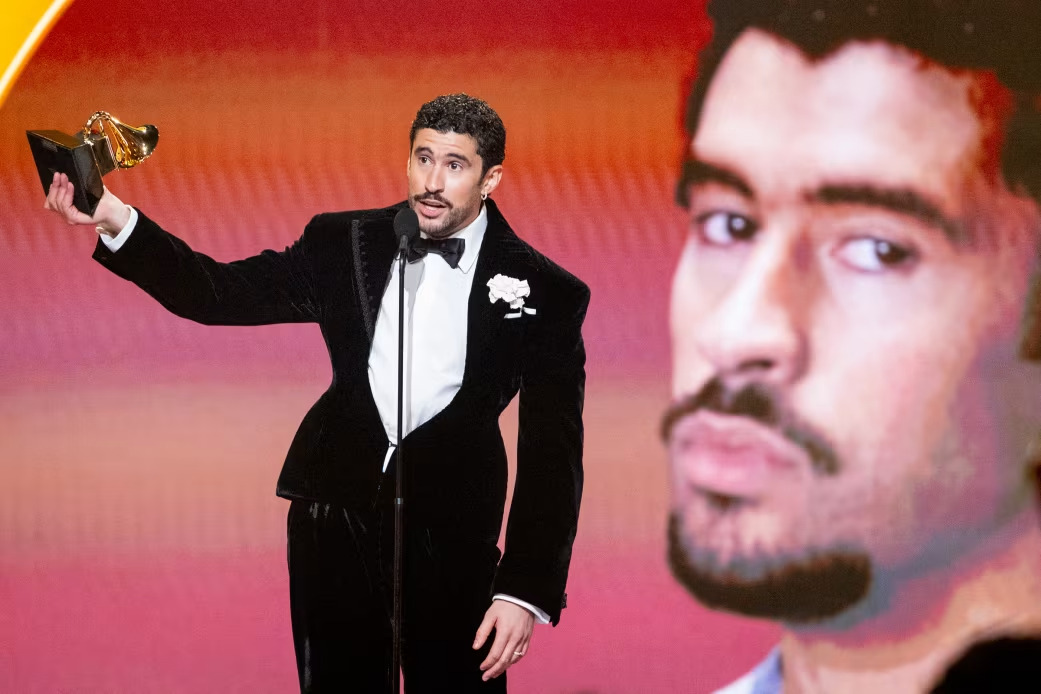
The moment Bad Bunny’s album Debí Tirar Más Fotos won Album of the Year at this year’s Grammy Awards, the assumptions underpinning the music industry were quietly—yet decisively—overturned. It marked the first time in history that a Spanish-language album received the Recording Academy’s highest honor. The victory went beyond musical acclaim, posing a fundamental question to American society itself: Who gets to stand at the center?
For a long time, Latin music—despite its global influence—has been treated within the music industry not as a major pillar, but as a separate “category.” Even when it dominated the charts and achieved overwhelming streaming numbers, the final destination of recognition always seemed to lie elsewhere. That unspoken hierarchy has been hard to deny.
It was precisely this structure that Bad Bunny’s win shattered. The fact that the Recording Academy’s most prestigious award went to an album sung in Spanish effectively nullified the long-held assumption that English must sit at the center. Latin music is no longer on the margins. The axis of evaluation itself has shifted.
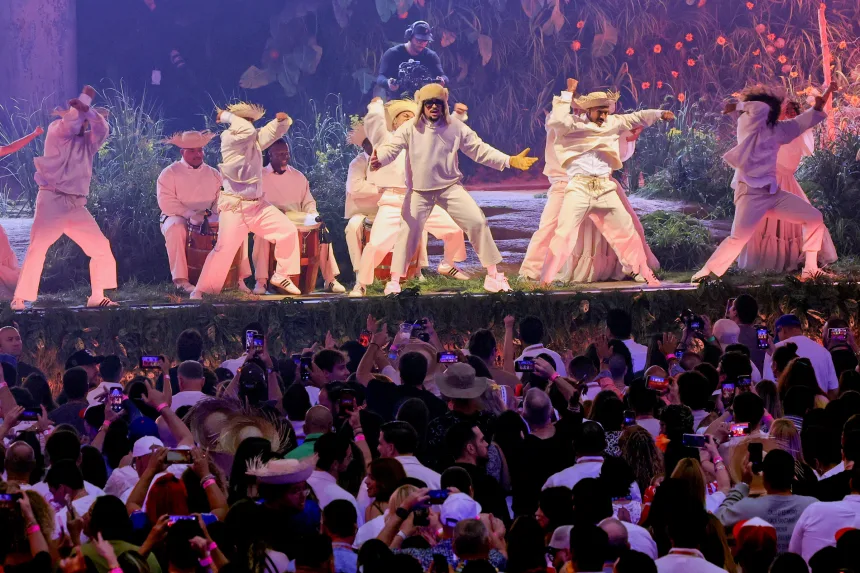
For millions of Latinos in the United States, the meaning of this victory is deeply personal and profoundly urgent. It is not merely a success story, but a reclamation of visibility—a public acknowledgment of belonging within American society. That is why this award was received not only with celebration, but with intense emotion.
What proved especially symbolic was Bad Bunny’s refusal to separate the stage from politics. During his acceptance speech for Best Música Urbana Album, he chose to bypass the usual expressions of gratitude and instead directly called out the Immigration and Customs Enforcement agency (ICE), shouting, “Get out!” According to the television broadcast, the audience in Los Angeles responded with an overwhelming roar of applause.
He continued: “We are not savages, we are not animals, we are not aliens. We are human beings, and we are Americans.” These words were less a provocation than a declaration—an assertion of existence long denied. Some may feel discomfort at hearing such a direct political message from an awards podium. Yet the very history of Latin music being pushed into a “supporting role” was itself already political.
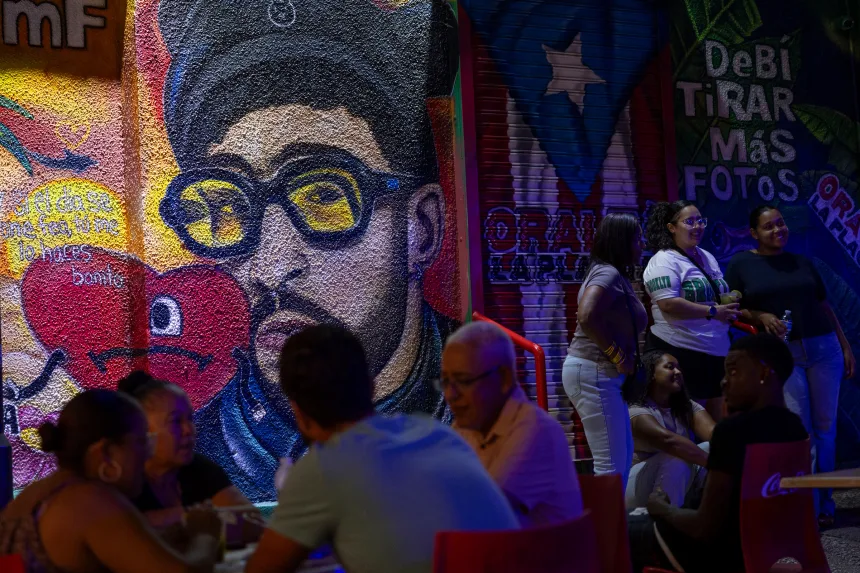
What makes this moment even more striking is its timing. It came just one week before Bad Bunny is set to headline the halftime show at Super Bowl LX. Winning a Grammy and delivering such a speech on the eve of the world’s largest entertainment stage underscores a simple truth: Latin culture now stands squarely at the intersection of music, sports, and society.
This award is not merely the triumph of a single artist. It is a clear answer to the question, “How far can Latin music go?” The answer is simple: it is already at the center.
What Bad Bunny demonstrated is that a new era has begun—one in which music once again confronts social reality head-on and speaks from its very core. Quietly, but unmistakably, history has turned.