
A Planet-Scale Chain Reaction Triggered by Air-Pollution Cleanup
TEXT : Cristpher Anderson
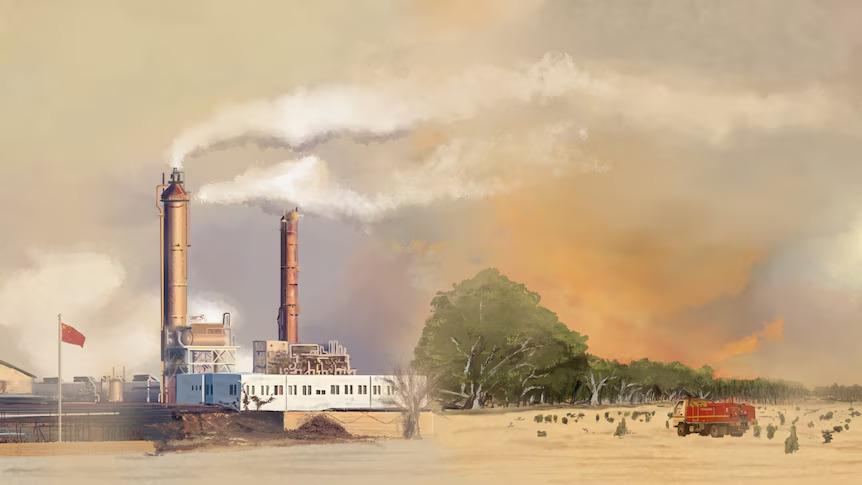
On the eve of the 2008 Beijing Olympics, Chinese authorities embarked on unprecedented measures to curb air pollution. Half of the city’s private vehicles were restricted from the roads, factories were shut down, and construction projects were halted—resulting in temporarily clearer skies. Yet more than a decade later, that “success” is now being linked to potential effects far beyond China’s borders, possibly influencing Australia’s climate and increasing the risk of bushfires. Do environmental policies truly bring only unambiguous good?
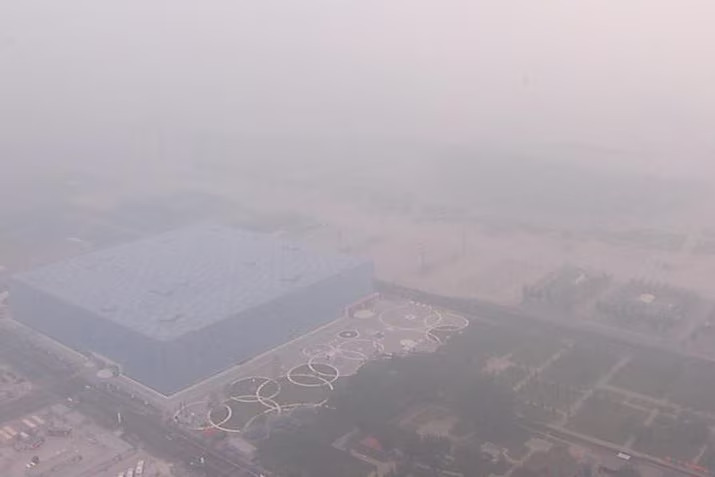
Just weeks before the opening of the Beijing Olympics, authorities introduced bold traffic restrictions in the city, limiting vehicle use based on whether license plates ended in odd or even numbers. This was one of several emergency measures—alongside factory closures and construction halts—aimed at suppressing the severe smog that had plagued residents for years.
Behind the rapid economic growth, air pollution had become a constant source of health damage, reaching levels that threatened even the staging of a major international event. To ensure the success of the Games, there was no choice but to change the sky itself.
The impact of these measures was unmistakable. During the Olympic period, Beijing’s skies turned strikingly blue. Yet the haze was never completely eliminated, and criticism of air pollution from athletes and international media continued even after the Games ended. This experience marked a major turning point for China.
Air pollution came to be recognized not merely as a domestic issue, but as one directly tied to international reputation and national image—a realization that began to be shared at the policy level.
In the years that followed, China pursued full-scale air-cleaning policies. The focus was on aerosols—tiny particles suspended in the air. Aerosols include not only particles released by the burning of fossil fuels, but also those from volcanic eruptions, wildfires, and even sea salt.
When present in large quantities, aerosols become visible as haze and can influence weather conditions such as temperature and rainfall. After 2008, China’s aerosol emissions peaked in the 2010s and then declined rapidly. By statistical measures, air purification could be described as a clear “success.”
However, in the latter half of 2025, a team of Chinese researchers published a paper pointing to an unexpected connection. They suggested that China’s aerosol reductions since the 2010s may have altered atmospheric systems across the Pacific, lowering humidity across large parts of Australia.
As a result, the risk of wildfires was found to have risen significantly across all Australian states and territories. The idea that environmental improvements in one country could heighten risks thousands of kilometers away underscores once again the complexity of the climate system.
Researchers further note that as aerosols’ ability to temporarily mask global warming diminishes, rising temperatures may be becoming more pronounced. While air pollutants have serious negative effects on health and visibility, they also reflect sunlight and have helped slow the pace of warming. Reducing them was the right choice—but it may also have revealed the climate’s “true face.”

The traffic restrictions introduced before the Beijing Olympics saved the city’s skies in the short term. Yet the air-cleaning policies that followed are now intertwined with climate change on a planetary scale.
Environmental measures are guided by good intentions and science, but their effects are not linear. Improvements in one region can create new vulnerabilities elsewhere—a reality we must confront.
Beyond the clearing of Beijing’s skies, the Earth has quietly begun to change in other ways. Environmental issues can no longer be resolved by the efforts of a single nation alone. In an era of deep global interconnection, what is required of us is decision-making that takes the entire planet into view—and the resolve to accept the complexity that comes with it.