
A Ring of Fire Skims the Earth
TEXT : Peter Robertson
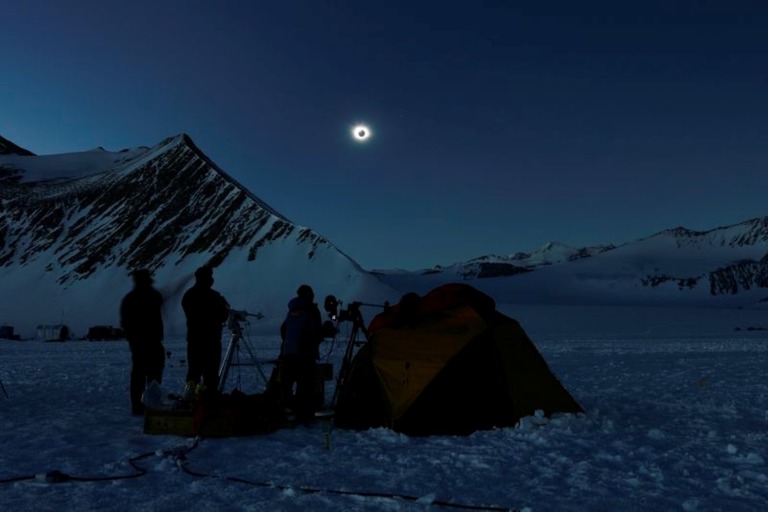
The first solar eclipse of the year will occur on the 17th. Known as the “Ring of Fire,” this annular solar eclipse will leave the center of the sun darkened while a brilliant ring of light glows around it. Only about 2% of the world’s population will be able to witness the full annular effect, with the prime viewing location limited to a small portion of Antarctica. Here is what to know about this rare celestial event and how it unfolds.
An annular solar eclipse occurs when the moon passes between the Earth and the sun. However, specific conditions must be met. The moon’s orbit is elliptical, meaning its distance from Earth is not constant. According to C. Alex Young of NASA’s Goddard Space Flight Center in Greenbelt, Maryland, when the moon is positioned farther from Earth, it appears slightly smaller from our perspective and cannot completely cover the sun’s surface.
As a result, a bright ring of sunlight remains visible around the moon’s dark silhouette. This glowing ring gives rise to the name “Ring of Fire.” If the moon fully blocks the sun, the event becomes a total solar eclipse. If the sun, moon, and Earth are not perfectly aligned, a partial solar eclipse occurs instead. The precise positioning of these three bodies determines how the eclipse appears from Earth.

According to the astronomy website Time and Date, the best view of this annular eclipse will be confined to a very small part of Antarctica. Other areas of Antarctica, along with portions of Africa and South America, will experience a partial eclipse.
Although this is a global astronomical event, only about 2% of the world’s population will be able to see the complete “ring” effect. Solar eclipses occur along a narrow path where the alignment is exact. Even a slight geographical shift changes the view—outside the central path, observers will see only a partial eclipse or no noticeable change at all.
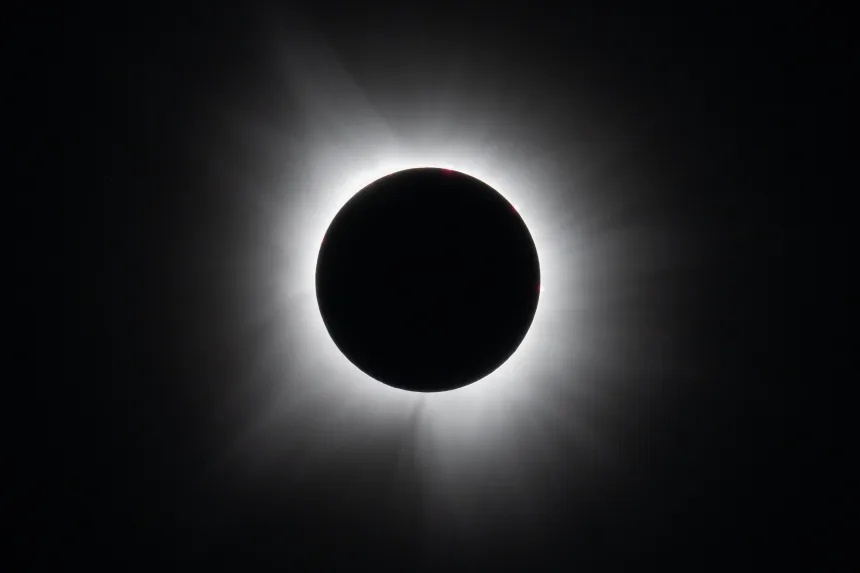
Annular solar eclipses occur roughly once every one to two years. However, while they happen somewhere on Earth with that frequency, the chance to observe one from a specific location is rare. The next annular eclipse, on February 6, 2027, is expected to be visible across wider areas of South America and Africa.
According to Young, the next opportunity to observe an annular eclipse from the United States will not come until 2039. This upcoming event is also the first annular solar eclipse since 2024. While celestial mechanics follow predictable patterns, the opportunity to witness such an alignment from any given place and time is far from ordinary.
Proper eye protection is essential when observing a solar eclipse. Certified solar viewing glasses must be used, as looking directly at the sun with the naked eye—or even through regular sunglasses—can cause serious retinal damage. This precaution applies even during a partial eclipse.
Unlike a total solar eclipse, an annular eclipse does not plunge the surroundings into darkness, since the sun is never fully covered. Still, the sight of a delicate ring of fire suspended in the daytime sky is a powerful reminder of the precision of cosmic geometry. The distance between Earth and the moon, the tilt of their orbits, and the observer’s location must align almost perfectly.
From the icy expanse of Antarctica to skies over parts of Africa and South America, this rare celestial display will be shared by only a small fraction of humanity—an awe-inspiring testament to the rhythms of the universe.